Ensimmäisenä työpäivänä uudet työkaverini muistuttelivat toisiaan, että minut täytyy laittaa apinalaatikkoon. Alan sisäpiirin termit tulivat pikkuhiljaa tutuksi, kuten koko se ihme, miten paikallislehti synnytettiin kolmesti viikossa maailmalle.
(Apinalaatikko = Jokaisesta sanoma- ja aikakauslehdestä löytyvä ilmoitus, jossa on lehden toimittajien ja ilmoitusvalmistuksen yhteystietoja, joskus kuvatkin ja muuta tärkeätä tietoa lehdestä.)
Elettiin vuotta 1995, jolloin Suomi liittyi Euroopan unioniin ja voitti ensimmäisen jääkiekon maailmanmestaruutensa. Palkintopokaali käväisi myös konttorimme tiskillä, jossa kävimme sitä koskettelemassa jonkun kuvatessa toimituksen filmikameralla.
Selfieitä en vielä saanut napattua uudella Nokia 2110 kännykälläni, mutta tekstiviestejä sillä pystyi sentään jo lähettämään. Suomen talous oli jo alkanut nousta laman jälkeen, mutta työttömyys oli vielä hyvin korkealla. Olin ikionnellinen, että olin päässyt töihin.
Olin aikani kuluksi opiskellut itselleni painopinnanvalmistajan tutkinnon, kun en merkonomina löytänyt enää toimistotöitä. Myöhemmin nimitys muutettiin painotuotantoassistentiksi ja nykyään nimike on mediapalvelujen toteuttaja. Painotekniikoiden ohella opiskeltiin uusia hienoja tietokoneohjelmia, kuten PhotoShoppia ja PageMakeria, josta tuli myöhemmin InDesign. Oman tietokoneen kotiin sain hankittua vasta vuosia myöhemmin, eikä silloin ollut sähköpostejakaan vielä. Se oli vielä suurelta osin paperiaikaa. Konttoreissa riitti mappeja, arkistolaatikoita ja paperiroskaa.
Melkein kaikki ilmoitukset leiskattiin valmiiksi, eli mainosmyyjät antoivat tarkan layout-ohjeen paperille piirrettynä. Jos ilmoitukseen määrättiin laitettavaksi montaa toistensa kanssa pahasti riitelevää fonttia, se vaan oli tehtävä. Suuri osa ilmoitusasiakkaista oli vakiasiakkaita, joiden ilmoitukset tehtiin vaan edellistä tiedostoa hieman muokaten. Leiska tietysti nopeuttaa ilmoitusvalmistajan työntekoa, kun ei tarvitse yhtään vekslata ja miettiä mitään, mutta kyllä siinä joskus tuntui, että oli vain aivottomana koneenkäyttäjänä liukuhihnalla.
Kiireessä ei ollut kivaa photoshoppailla, kun kuvaoriginaali saattoi olla vaikka jostain sanomalehdestä leikattu paperikuvan pala, jossa oli ehkä vielä jotain tekstiä kuvassa olevan tuotteen päällä, ja se piti saada pois. Huono kuva saattoi tulla digitaalikameralla otettujen hyvälaatuisten kuvien viereen, joten täytyi yrittää säätää erilaiset kuvat sopimaan jotenkin keskenään. Yritykset kertoa resoluutioista ja moire´sta menivät kuin kuuroille korville.
Varsinkin lehden ilmestymispäivää edeltävät, eli taittopäivät tuppasivat venymään ylitöiksi, kun ilmoituksia otettiin tehtäväksi usein vielä ihan viime tipassakin, vaikka ilmoitusten jättöaika oli ollut jo aikoja sitten. Kotiin ei voinut tietenkään lähteä, ennen kuin kaikki ilmoitukset seuraavan päivän lehteen oli tehty valmiiksi. Jos sattui olemaan ilmoitussivujen taittovuorossa, niin oli vielä tehtävä sekin homma. Joskus se sujui nopeasti, joskus ei.
Jos joku oli vahingossa tallettanut ilmoituksen väärälle tunnistenumerolle, tai ilmoitusta ei oltu tehty ollenkaan, niin se ilmoitus ei tietenkään ilmestynyt lopulliseen sivujentaitto-ojelmaan, ja sitten oli tehtävä salapoliisintyötä ja tarvittaessa tehtävä se puuttuva ilmoitus. Puuttuvat ilmoitukset olivat aika usein samanlaisina toistuvia sarjailmoituksia, joissa ilmoitusvalmistaja oli vaan unohtanut tallettaa tuo taittotiedosto kaikille seuraavienkin ilmestymispäivien tunnistenumeroille, joten riitti kun löysi sen ensimmäisen ilmoituksen ja tallensi sen sitten niille muille.
Jokaiselle ilmoitukselle tehtiin ensin ilmoitusrekisteriohjelmassa kaikki tunnistetiedot, kuten asiakkaan tiedot, ilmoituksen koko ja paikka (sivu/osasto), ilmestymispäivä ja muita tietoja. Asiakkaan tiedot löytyivät asiakasrekisteriohjelmasta, tai sitten ne luotiin sinne. Yleensä ilmoitusmyyjät tekivät näitä asioita, mutta joskus myös ilmoitusvalmistaja. Rivi-ilmoitukset tulivat useimmiten suoraan ilmoitusvalmistajalle. Laskuttaja sitten aikanaan tulosti laskut asiakkaille laskutusohjelmasta.
Avokonttorissa työskennellessä näin ja kuulin koko ajan, mitä samassa kerroksessa tapahtui ilmoitusvalmistuksessa, ilmoitusmyynnissä ja asiakaspalvelussa, jossa hoidettiin paljon myös lehden tilausasioita palvelutiskillä ja puhelimissa. Jos lehden jakelu oli myöhässä, melkein kaikki puhelimet soivat tauotta. Onneksi toimitus sentään sijaitsi eri kerroksessa. Ilmoitusvalmistajien oli autettava asiakaspalvelussa, niin puhelimessa kuin tiskilläkin, mikä todella häiritsi ilmoituksiin keskittymistä. Siitä oli kuitenkin se hyöty, että pystyi joskus nappaamaan itselleen jonkun kivan ilmoituksen suoraan tehtäväksi.
Ilmoitukset oikoluettiin, jos vaan ehdittiin. Ilmoitusmyyjät usein halusivat vedoksen oikoluettavaksi ja katsottavaksi myymistään ilmoituksista, ja monet asiakkaatkin halusivat nähdä ilmoituksensa, mikä oli hyvä jotta mahdolliset virheet huomattiin. Kirjoitusvirheitä toki kiireessä joskus tuli, ja joskus ne päätyivät painettuun lehteen asti. Moni tilausasiakas soitti silloin voitonriemuisena löydettyään TAAS virheen, mutta kauppiaat eivät olleet yhtään iloisia vaan saattoivat ymmärrettävästi olla aika kiukkuisia ja tulla melkein lankoja pitkin antamaan sapiskaa. Ikäviä olivat joskus myös kuolinimoitukset, joiden värssyjen pilkkuvirheiden aiheuttama pahastus saattoi saada omaisilla ylisuuret mittasuhteet.
Ilmoitusvalmistus muuttui huomattavasti tylsemmäksi, kun ilmoitukset alkoivat tulla entistä enemmän valmiina tai puolivalmiina. Aikaa kului usein tiedostojen auki saamisen kanssa taistelemiseen, mikä todella turhautti, kun olisi samassa ajassa jo tehnyt sen ilmoituksen itse. Ensi alkuun laitteet, ohjelmistot ja tiedostot eivät aina ymmärtäneet täysin toisiaan, mikä aiheutti joskus ongelmia ja tosi karmeitakin yllätyksiä painettuun lehteen, esimerkiksi sellaisia että kaikki ilmoituksen kuvat puuttuivat, vaikka ruudulla ja vedoksessa näytti että kaikki on ok.
Lehti painettiin joskus yöllä kaukana toisella paikkakunnalla lehtipainossa kiireellä toisten lehtien odotellessa vuoroaan, kun me jo nukuimme, tai pyörimme stressaantuneena miettien, mitähän aamulla olisi tällä kertaa vastassa. Ala oli jatkuvassa muutoksessa, ja tuo aika alkoi olla lopun alkua paikallislehtien konttoreille. Poislähteneiden tilalle ei enää otettukaan uutta työntekijää, toiminnot siirtyivät yksi kerrallaan muualle ja asiakaspalvelut ja myynnit osin nettiin. Lopulta konttori suljettiin, lehden ilmestymispäivät vähenivät, lehti laihtui ja ilmestymispäivät vähenivät.
Kaikesta hulinasta ja kommelluksista huolimatta paikallislehden konttori oli tosi hauska ja mielenkiintoinen työpaikka, jossa oppi paljon ja tapasi vaikka minkälaisia tyyppejä. Joskus saattoi joku julkkiskin tupsahtaa ovesta sisään toimituksen haastateltavaksi. Hulvattoman hauskoja muistoja tuosta ajasta jäi paljon, ja aika on tietysti niitä vähemmän hauskoja jo kullannut. Tein siellä eripituisia määräaikaisia jaksoja ja kiireapukeikkoja noin kuuden vuoden ajan, kunnes lähdin luovemmille teille taidetta opiskelemaan. Julkaisugrafiikka ei lopulta kuitenkaan jäänyt kokonaan pois elämästäni, vaan palasi eri muodoissa työkuvioihin.
Jatkoin tätä kirjoitusta parin vuoden päästä:
20 vuotta myöhemmin, kun elettiin vielä korona-aikaa ja naapurimaamme johtaja alkoi isoimman sekoilunsa, sain hetkeksi mahdollisuuden kurkistaa ja osallistua taas sanomalehtien synnyttämiseen, ja juuri siellä, missä tuota samaa pientä paikallislehteäkin nykyään taitetaan monien muiden lehtien kanssa, ainakin silloin kun sitä ei tehdä Porissa, Helsingissä tai etänä vaikka kesämökillä ihan jossain muualla.
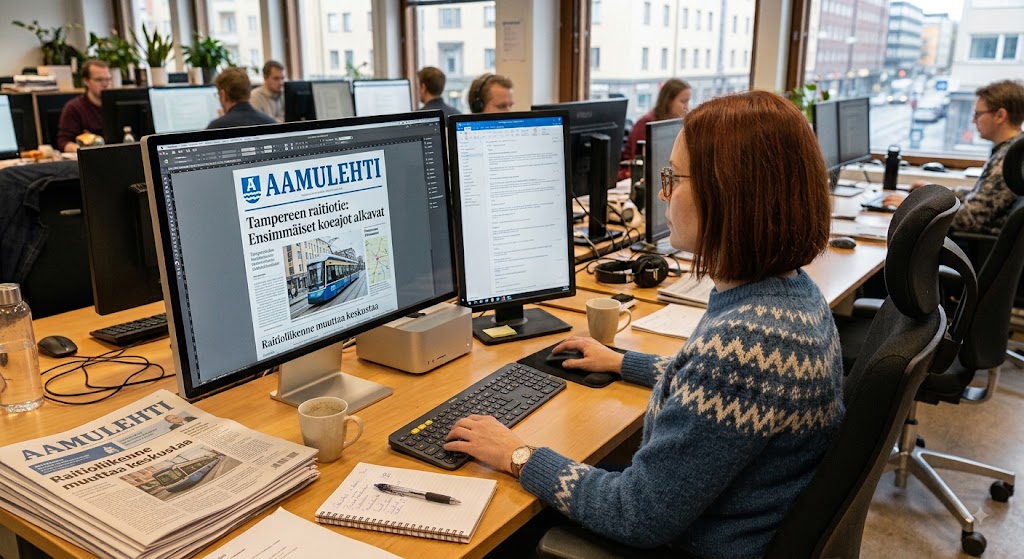
Toimituksessa on nykyään hiljaista kuin huopatossutehtaalla, puhelimet soivat harvoin ja ovet ovat visusti lukossa ja vartioitu. Haastattelut hoidetaan puhelinkopeissa, neuvotteluhuoneissa tai jossain muualla. Monet asiat hoidetaan netissä ja moni työntekijä tekee usein töitä etänä. Itsekään en viitsinyt aina lähteä työpaikalle, varsinkaan iltavuorossa, joka loppui vasta puoleltaöin, kun viimeinenkin lehti oli valmis painettavaksi. Päivittäisissä Teams-palavereissa ja chatissa hoidettiin välttämätön yhteydenpito. Monia kollegoja en tavannut koskaan ja pystyin vain mielessäni kuvittelemaan, miltä he näyttivät – tai näin heistä vain pienen kuvakkeen, jonka perusteella en ehkä olisi heitä tavatessa tunnistanut.
Hädin tuskin ehdin oppia jotenkuten ison talon uudet systeemit, kuviot ja kummalliset sisäpiirin termit sekä tutustua edes vähän kollegoihin, kun puskista tuli uusi valtava muutos ”töiden sujuvoittamiseksi ja resurssien säästämiseksi”…Kiire ja multitaskaaminen kuitenkin oikeasti vain lisääntyivät niille ”onnekkaille”, jotka saivat vielä jäädä ainakin joksikin aikaa sinne raatamaan paperilehtien taiton parissa. Saa nähdä, milloin niiden painaminen loppuu kokonaan. Uutiset ovat jo vahvasti siirtyneet kiivastahtiseen digiaikaan, jossa uutiset vanhenevat todella nopeasti. En enää itsekään lue uutisia paperilehdestä, en edes sen digiversiosta.
Memories of Newspaper Work
On my very first day on the job, my new colleagues kept reminding each other that I needed to be put in the ”monkey box” (apinalaatikko). Little by little, the industry’s insider terms became familiar, as did the whole miracle of how a local newspaper was brought into the world three times a week.
(Apinalaatikko = Masthead / Imprint = A notice found in every newspaper and magazine containing contact details for the publication’s editors and advertising production, sometimes including photos and other important information about the periodical.)
The year was 1995, when Finland joined the European Union and won its first ice hockey world championship. The championship trophy even made a brief appearance on the counter of our office, where we went to touch it while someone took photos with the editorial department’s film camera. I couldn’t snap any selfies yet with my new Nokia 2110 mobile phone, but at least you could already send text messages with it. The Finnish economy had already started to recover after the recession, but unemployment was still very high. I was overjoyed to have found a job.
I had studied to become a prepress technician just to pass the time, as I could no longer find office work with my business diploma. Later, the title was changed to print production assistant, and today the title is media service producer. Along with printing techniques, we studied fancy new computer programs like PhotoShop and PageMaker, which later became InDesign. I didn’t get my own computer at home until years later, and back then there were no emails either. It was still largely the era of paper. Offices were full of binders, archive boxes, and paper waste.
Almost all advertisements were laid out in advance, meaning the ad sales reps gave precise layout instructions drawn on paper. If an ad was ordered to feature multiple fonts that clashed terribly with each other, you just had to do it. A large part of the advertising clients were regular customers whose ads were made simply by tweaking the previous file a bit. Of course, a layout speeds up the ad designer’s work because you don’t have to fiddle around or think about anything, but sometimes it really felt like being just a brainless machine operator on an assembly line.
It wasn’t fun to do photoshop work in a rush when the original image might be, for example, a piece of a paper photo cut out of some newspaper, perhaps still with some text on top of the product in the picture, and that had to be removed. A poor-quality photo might end up right next to high-quality images taken with a digital camera, so you had to try to adjust different images to somehow fit together. Attempts to explain resolutions and moiré went completely unheard.
Especially the days before the paper came out, i.e., layout days, tended to stretch into overtime, as ads were often accepted for production at the very last minute, even though the deadline for submitting ads had passed ages ago. Of course, you couldn’t go home until all the ads for the next day’s paper were finished. If you happened to be on the page layout shift for the ad pages, you still had to do that job too. Sometimes it went quickly, sometimes it didn’t.
If someone had accidentally saved an ad under the wrong identification number, or if the ad hadn’t been made at all, then that ad naturally didn’t appear in the final page layout software, and then you had to do detective work and, if necessary, create the missing ad. Missing ads were quite often serial ads that repeated in the same way, where the ad designer had simply forgotten to save that layout file for all the ID numbers of the following publication days, so it was enough to find the first ad and then save it for the others.
For every ad, all identification data was first entered into the ad registry software, such as customer details, ad size and position (page/section), publication date, and other information. The customer’s details were found in the customer registry software, or else they were created there. Usually, the ad sales reps did these things, but sometimes the ad designer did too. Classified ads usually came directly to the ad designer. The billing clerk would then print the invoices for the customers from the system in due course.
Working in an open-plan office, I could see and hear all the time what was happening on the same floor in ad production, ad sales, and customer service, where a lot of newspaper subscription matters were also handled at the service counter and on the phones. If the newspaper distribution was late, almost all the phones rang non-stop. Fortunately, the editorial staff was located on a different floor. The ad designers had to help out in customer service, both on the phone and at the counter, which really disrupted focusing on the ads. However, it had the benefit that you could sometimes grab a nice ad for yourself to work on directly.
The ads were proofread if there was time. The ad sales reps often wanted a proof to review and check the ads they had sold, and many customers also wanted to see their ads, which was good so that possible mistakes were noticed. Spelling mistakes did, of course, happen sometimes in a rush, and sometimes they made it all the way into the printed paper. Many subscribers would then call triumphantly having found an error AGAIN, but the shopkeepers were not happy at all; understandably, they could be quite angry and practically come through the phone lines to give you a scolding. Obituaries were also sometimes unpleasant, where the resentment caused by comma splices or typos in the verses could take on outsized proportions for the relatives.
Ad production became considerably more boring when ads started coming in more and more ready-made or half-finished. Time was often spent fighting to get files open, which was truly frustrating when you could have made the ad yourself in the same amount of time. In the beginning, devices, software, and files did not always fully understand each other, which sometimes caused problems and truly horrible surprises in the printed paper—for example, that all the images in an ad were missing, even though everything looked fine on the screen and in the proof.
The paper was sometimes printed during the night far away in another town at a newspaper press in a rush while other papers waited for their turn, while we were already sleeping or tossing and turning anxiously, wondering what would be waiting for us in the morning this time. The industry was in constant flux, and that time began to be the beginning of the end for local newspaper offices. New employees or substitutes were no longer hired to replace those who had left or were absent; operations moved entirely elsewhere and online, one by one. In the end, the office was closed, the newspaper’s publication days decreased, and the paper just kept getting thinner.
Despite all the hustle and bustle and mishaps, the local newspaper office was a really fun and interesting workplace where you learned a lot and met all kinds of characters. Sometimes a celebrity might pop through the door to be interviewed by the editorial staff. Many hilariously funny memories remained from that time, and time has, of course, already sugarcoated the less pleasant ones. I worked there for various periods of fixed-term contracts and rush-hour gigs for about six years, until I left for more creative paths to study art. In the end, desktop publishing did not disappear entirely from my life but returned in different forms to my work routines.
I continued this writing a couple of years later:
20 years later, during the lingering days of the Covid pandemic and just as the leader of our neighboring country began his biggest madness, I briefly caught a glimpse and got to participate in the birth of newspapers once again. It happened at the very place where that same little local paper is nowadays laid out alongside many other publications—at least when it isn’t being done in Pori, Helsinki, or remotely from a summer cottage somewhere else entirely.
The editorial office these days is as quiet as a graveyard. Phones rarely ring, and the doors are kept securely locked and guarded. Interviews are conducted in phone booths, meeting rooms, or elsewhere. Most things are handled online, and many employees often work remotely. Even I didn’t always feel like commuting to the office, especially for the evening shift that didn’t end until midnight, when the very last paper was ready for the printing press. Daily Teams meetings and chats took care of the necessary communication. There were many colleagues I never actually met in person, and I could only picture in my mind what they looked like—or I only saw a tiny avatar of them, which probably wouldn’t have been enough to recognize them if we met.
I had barely managed to get a grasp of the large corporation’s new systems, workflows, and strange insider jargon—let alone get to know my colleagues even a little—when another massive wave of changes hit us out of the blue, aimed at ”streamlining workflows and saving resources.” In reality, however, the hustle and multitasking only intensified for those ”lucky ones” who were allowed to stay, at least for a while longer, to keep grinding away with print newspaper layout. Time will tell when printing them will stop entirely. News has already firmly shifted into a fast-paced digital era where stories age incredibly fast. Personally, I don’t even read the news from a printed paper anymore, not even from its digital edition.
(Translated by AI)